When COVID-19 forced schools to close, education did not stop equally for every child.
For many children, the classroom simply moved home. Television, digital platforms and other forms of remote learning provided important alternatives to conventional schooling. But for children living in underserved communities, the reality was different. Access to a television, reliable internet connection, smartphones, learning materials or an adult able to support home learning could not always be taken for granted.
At Mother of All Nations Foundation (MoANF), this raised a question that went beyond the immediate school closures which was,What happens to children already facing educational disadvantage when the systems designed to keep learning going cannot reach them?
We knew that doing nothing could deepen existing inequalities. Yet we also recognised something equally important: we did not need to enter the community pretending to have all the answers.Instead, we went back to the community, and before designing a programme, we listened rather than immediately designing an intervention from our office, we started with the people closest to the challenge.
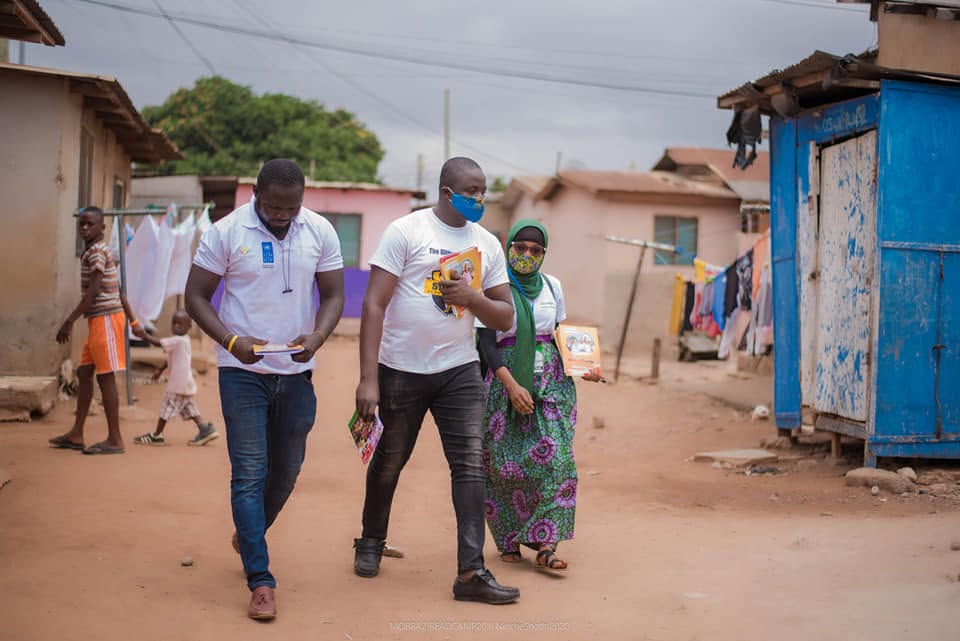
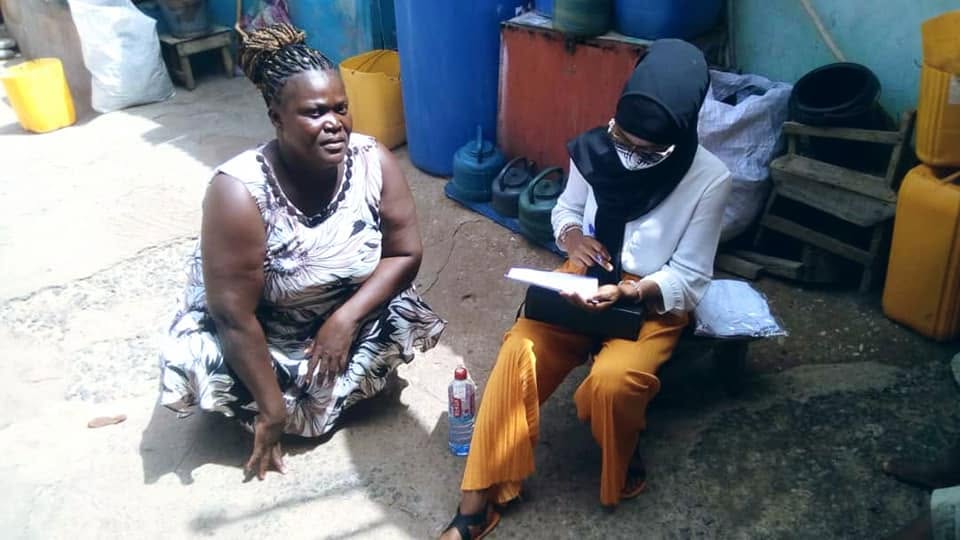
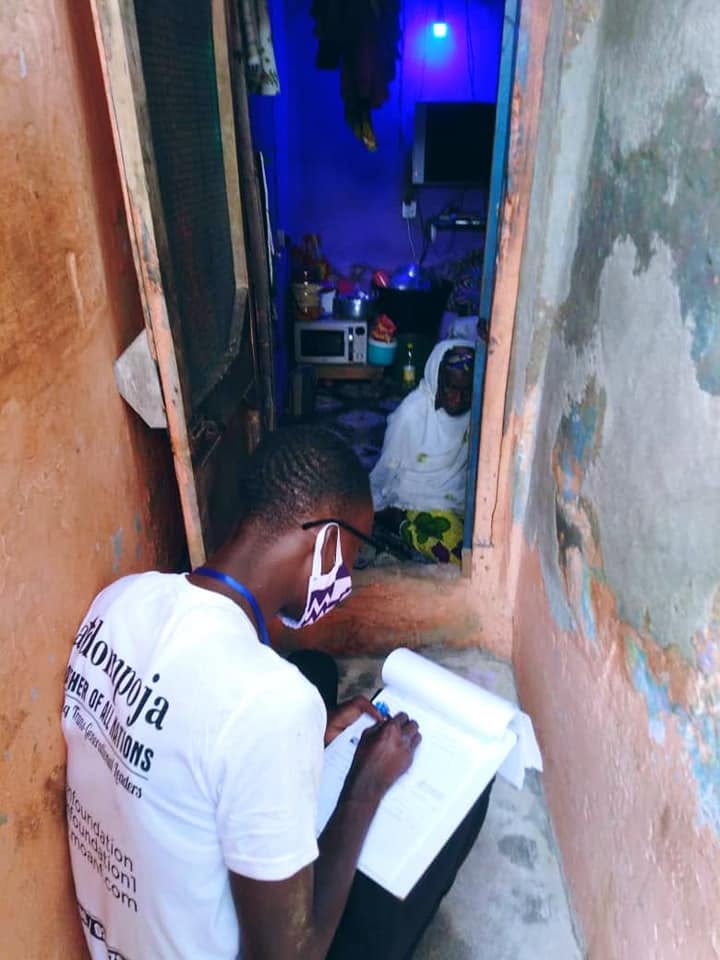
Our team went into the community, visiting homes and engaging people in the spaces where the effects of the lockdown were being experienced.
In total, 150 community members participated in the engagement process: 50 parents, 25 teachers living within the community, 40 school-going children, 12 traditional leaders, 15 religious leaders and eight representatives of community-based organisations. Women and girls constituted 62% of those engaged.
The photographs from those engagements tell an important part of the story. Our team members can be seen sitting outside homes, on wooden benches and plastic chairs, listening, asking questions and taking notes.
These were not conference-room consultations, they were conversations at the grassroots.We wanted the community to help us answer one central question: “What can we do together to ensure that our children continue learning while their schools are closed?”
The process changed the nature of our response. Community people were part of defining the problem and shaping the response.
And the solution came from the conversations. Through these engagements, one thing became increasingly clear: if many children could not access the learning opportunities being delivered through television and digital platforms, we needed an approach that could take learning closer to where children actually were.
And during the lockdown, they were at home.
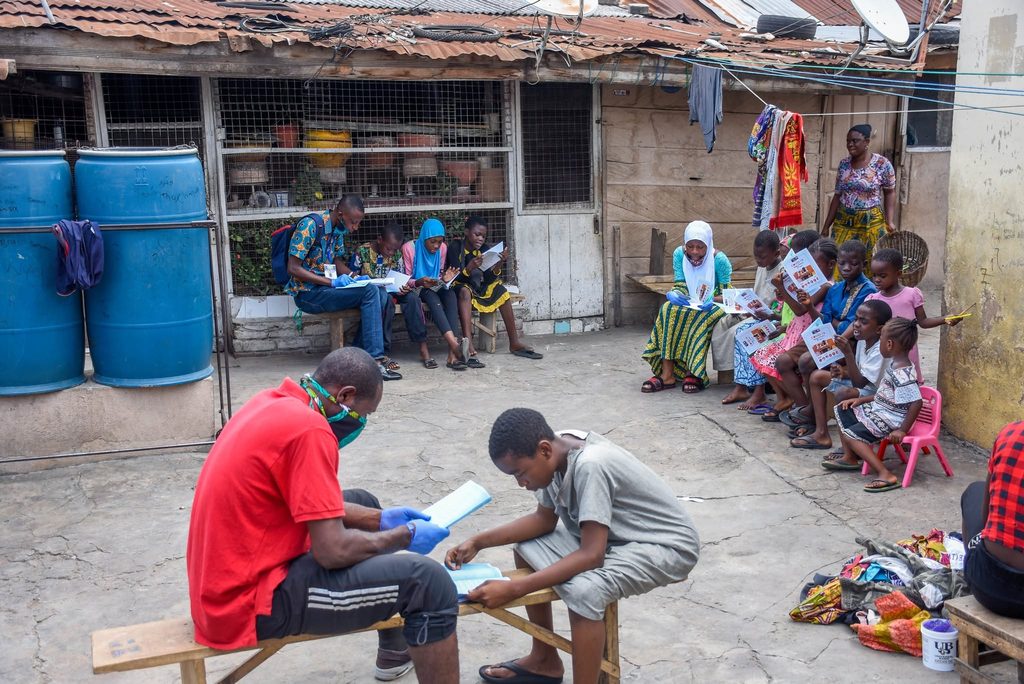
Together with the community, we therefore designed a home based literacy intervention that could provide children with structured learning while limiting prolonged physical contact.
The model was deliberately simple.
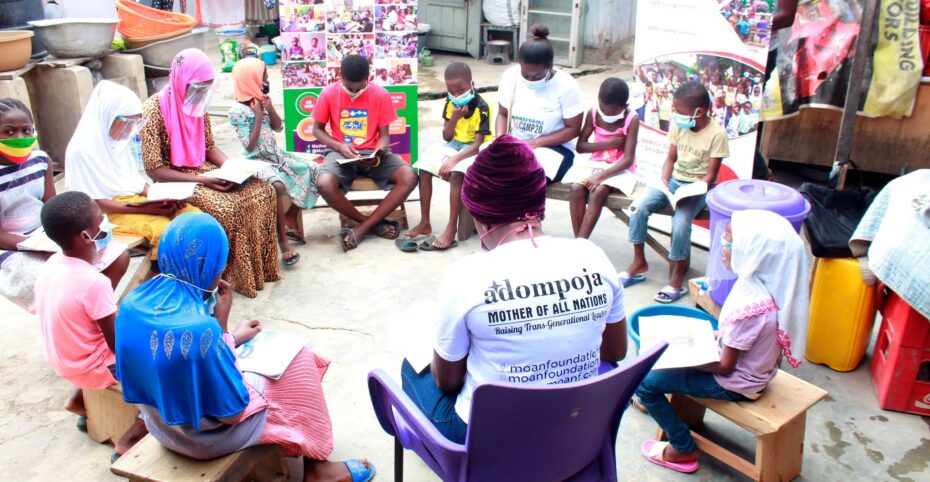
Reading and learning materials were developed and provided to participating children. Facilitators engaged children for approximately one hour of guided learning, after which assignments and activities were given to them to complete independently before the next engagement.
The physical structure of the community also influenced the design. Many families lived in compound houses, making it possible to reach small groups of children within their immediate residential environment rather than bringing large numbers of children together.
Where small-group engagement was necessary, groups were kept to 10 children or fewer, with physical distancing and the use of protective equipment and hand sanitiser by volunteers as part of the COVID-19 precautions adopted at the time.
A lesson that continues beyond COVID-19
Schools eventually reopened, but the lesson did not end with the pandemic.The experience helped reinforce the direction we continue to pursue at Mother of All Nations Foundation: development that starts from the ground up.
Whether we are working in early childhood development, literacy, civic engagement or community-led development, we increasingly recognise that sustainable change is more likely when communities have agency in the process.
This reminds us that meaningful community engagement does not always begin behind a conference table. Sometimes it begins in a compound house, under a tree, outside someone’s home or on a simple wooden bench with someone willing to ask a question and genuinely listen to the answer.
When the classroom closed, we did not simply take another classroom to the community. We worked with the community to rethink where learning could happen. And what we discovered remains central to our work today.
Communities are not merely places where development happens. They are partners, knowledge holders and leaders capable of shaping their own development.
Connect with MOANF: https://web.facebook.com/motherofallnationsfoundation/